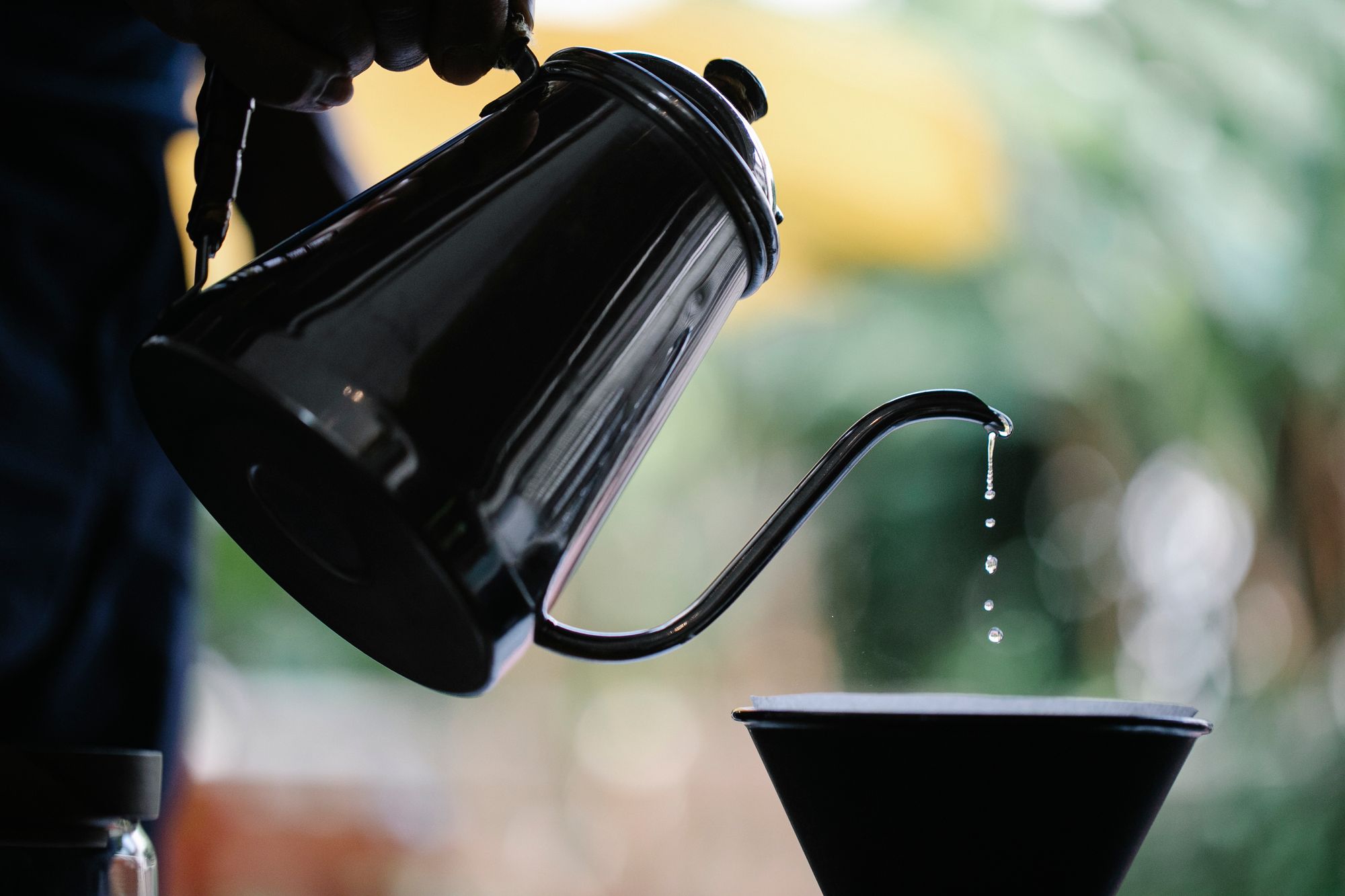
Coffee is mostly water — nearly 99% of a brewed cup and more than 90% of an espresso shot, by volume. That single fact explains why two people can use the same beans, the same grinder and the same method, and still end up with cups that taste noticeably different: the water itself is doing more of the work than most home brewers realise.
What Specialty Coffee Standards Say About Water
The Specialty Coffee Association publishes a target range for brewing water, and it's more specific than most people expect. Total dissolved solids should sit between roughly 75 and 150 parts per million, pH should land between 6.5 and 7.5, calcium hardness between 50 and 175 ppm, and alkalinity between 40 and 75 ppm. Water that's too far outside these bands tends to either under-extract (thin, sour cups) or over-extract (bitter, harsh cups) — the same grounds and brew time can taste completely different depending on what's actually in the water carrying them.
Why Chlorine Shows Up in the Cup
Chlorine is on that list too — the specialty coffee standard calls for none of it in brewing water. Chlorine is added to reticulated supply deliberately, as a disinfectant, and it's an effective, well-established part of how a large water network stays safe over long distances. But because it's a reactive compound, it can carry an unwanted flavour into whatever it's brewed with, coffee included. That's a real tension for a household that wants both a safely treated water supply and a cup that tastes purely of the beans.
The Minerals Distilled and Reverse-Osmosis Water Leave Behind
It's tempting to assume the purest possible water — distilled, or heavily reverse-osmosis filtered — would make the best coffee. Specialty coffee guidance says the opposite. Distilled water has had essentially everything stripped out of it, including the calcium and magnesium that help pull flavour compounds out of the grounds during extraction; the result is often described as flat or muted rather than clean. Reverse osmosis systems can run into a similar problem: they're very good at removing dissolved solids, sometimes too good, and unless minerals are deliberately added back afterward, the water can end up under-mineralised in the same way distilled water is. A separate, unrelated study on brewing water for tea reached a related conclusion from a different angle — testing five water types, it found distilled water produced the flattest flavour response of the group, while water carrying more dissolved minerals produced noticeably stronger sourness, bitterness and aroma. Different beverage, same underlying idea: mineral content, not just purity, shapes how a hot drink tastes.
What This Means for a Brisbane Coffee Habit
For a Brisbane kitchen, this plays out in a fairly ordinary way. Treated tap water leaving the plant is safe and well managed, and chlorine is carried the length of the distribution network on purpose, all the way to the tap — that's the job it's there to do. By the time that water reaches a coffee machine at home, the same chlorine that kept it safe in transit can be part of what makes a home-brewed cup taste different from one made at a café. A benchtop purifier built around carbon filtration — rather than reverse osmosis or distillation — targets that chlorine directly (activated carbon filtration typically reduces chlorine by up to 99%) without stripping the water down the way a distiller does. None of Ruhens' purifiers use reverse osmosis or distillation, so there's no extra step of adding minerals back afterward — the water coming out of the tap stays closer to what the specialty coffee guidelines describe as ideal for brewing.
A Few Things to Check Before Your Next Brew
- Skip distilled water for brewing — it's excellent for irons and humidifiers, not for coffee, since it has nothing left in it to help extraction.
- If you use a reverse-osmosis system, check whether it remineralises the water afterward — plain RO output can under-extract for the same reason distilled water does.
- Taste your water on its own first. If tap water tastes strongly of chlorine on its own, that's a reasonable early sign it'll affect the coffee too.
- Filter cartridges lose performance over time — replacing them on schedule keeps chlorine reduction consistent, rather than gradually drifting back up.